
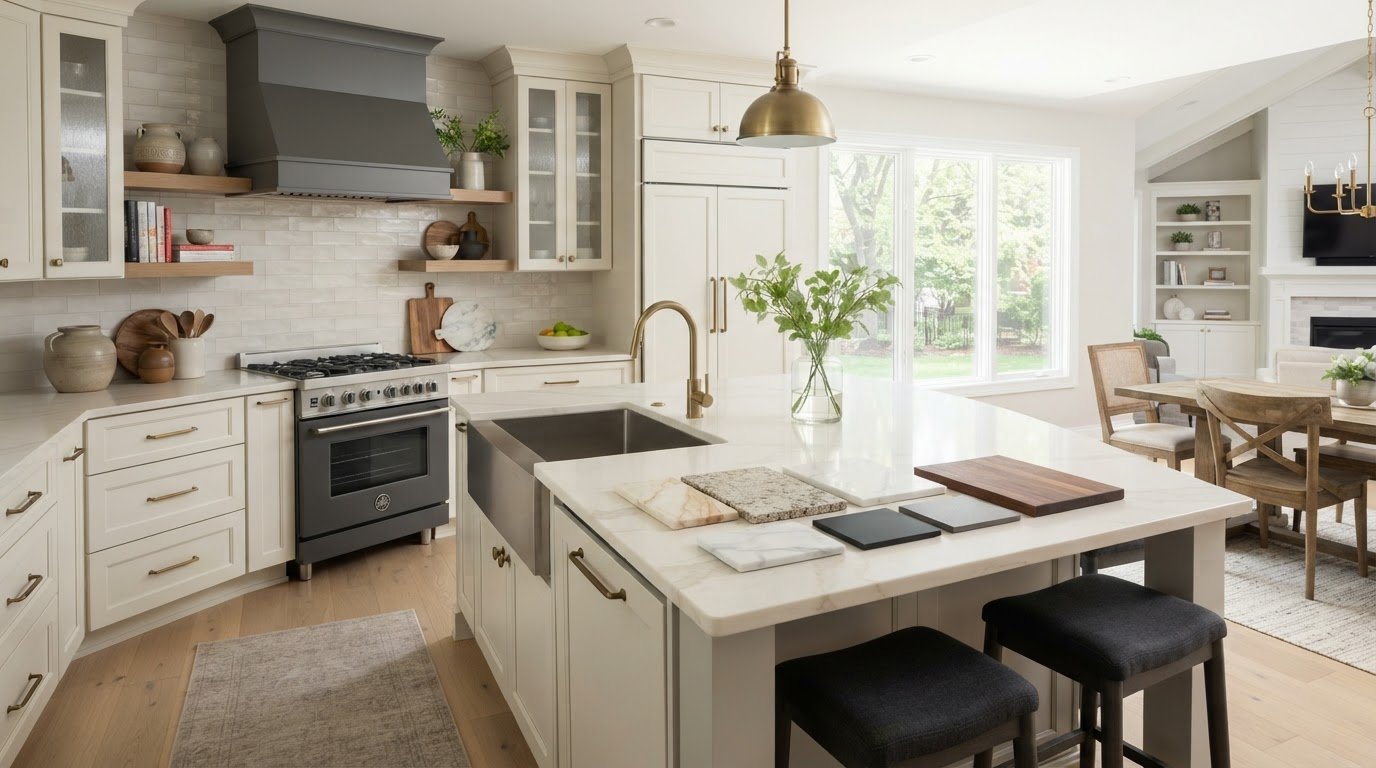
The countertop that looks perfect in a showroom may not suit the way you cook. If you’re wondering how to choose kitchen countertops, start with daily use, not appearance alone. Hot pans, spills, meal prep, and the amount of care you’re willing to take all affect how a surface works in your home.
A countertop should look good and fit your routine without adding chores you don’t want. This guide compares common materials by appearance, routine care, and everyday sensitivities, so you can narrow your options with confidence. You’ll also see how the countertop decision connects to cabinets, layout, and the rest of a kitchen remodel. Lotz Renovations, Inc. specializes in residential kitchen remodeling, bringing family-led experience to projects since 1986.
Key Takeaways
- To learn how to choose kitchen countertops, weigh cooking frequency, cleanup habits, household activity, and the look you want.
- Compare quartz, granite, marble, porcelain, laminate, and butcher block by routine care and common sensitivities, not by appearance alone.
- Coordinate your countertop with cabinets, backsplash, and sink so the finishes feel considered as a whole.
- Set priorities first, compare materials next, then bring your selection into the broader kitchen remodel plan.
How to choose kitchen countertops around the way you live
The right countertop should support what your kitchen actually does, not just look appealing in a sample. Think about how often you cook, how quickly you want to clean up, who shares the space, and what visual character you want. These details help turn a broad material search into a practical shortlist. A general overview of kitchen countertop materials can provide context on their functions and appearances, but your own routines should guide the decision.
Countertop suitability depends on how you use the kitchen, how much routine care you’re comfortable with, and the design priorities you want the surface to serve. Keep those factors in view as you compare options.
Which daily habits should shape your countertop decision?
If you cook most days, prep directly on the counters, or need quick cleanup between meals, prioritize a surface and care routine that fit those habits. Consider how you handle spills and heat, too. Check the care instructions for the specific product, and note whether it calls for sealing or extra attention around stains, scratches, or moisture. A countertop’s appearance may be compelling, but its everyday upkeep should feel manageable.
For a kitchen used mainly for occasional entertaining, serving, or display, visual impact may carry more weight. You might welcome a distinctive pattern or a material that asks for more attention if the kitchen sees lighter daily use. Household activity matters as well: children, frequent guests, and busy meal times can change how much wear and cleanup you expect.
Before comparing materials, write down your top three priorities. For example:
- Easy cleanup after everyday cooking
- A distinctive surface that anchors the room
- Comfort with regular care to achieve a particular look
Rank those priorities rather than treating every preference as equally important. Then use them to evaluate each material’s care needs and sensitivities. This makes trade-offs easier to see and helps you choose a countertop that fits both your routine and the larger kitchen remodel.
Compare kitchen countertop materials by durability, care, and appearance
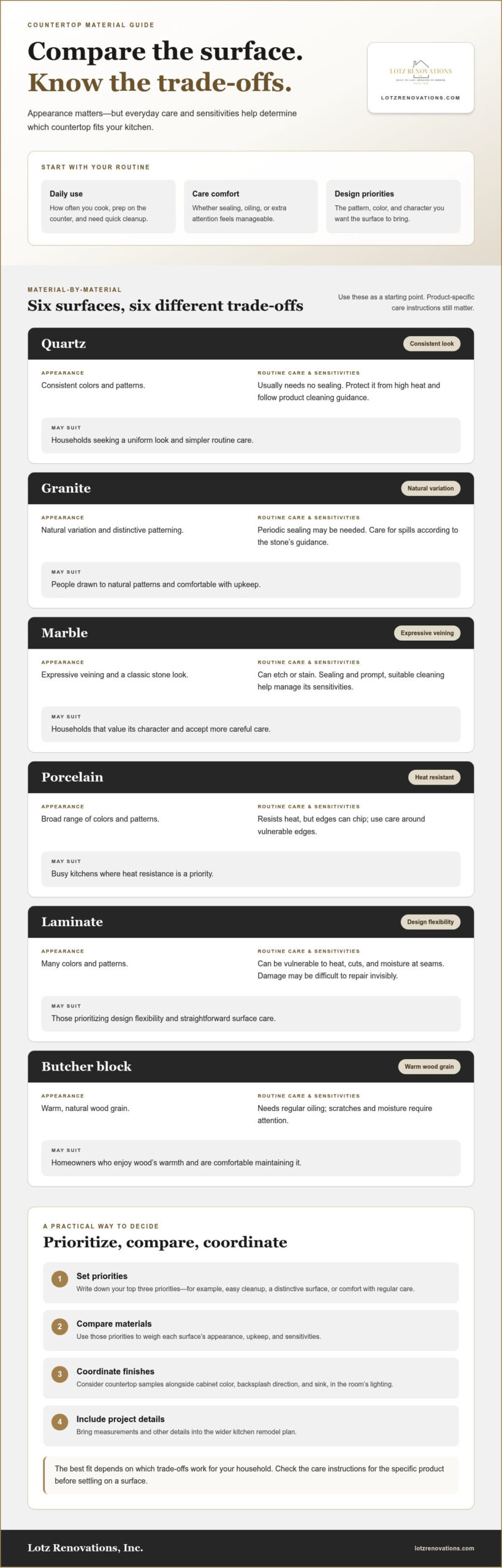
To decide how to choose kitchen countertops, compare how each surface looks with the care and everyday wear it can handle. No countertop material is right for every kitchen or household. The best fit depends on which trade-offs work for you, so consider the table as a starting point and follow the product-specific care guidance for your selection.
| Material | Appearance | Routine care and sensitivities | May suit |
|---|---|---|---|
| Quartz | Consistent colors and patterns | Usually needs no sealing; protect it from high heat and follow product cleaning guidance. | Households seeking a uniform look and simpler routine care. |
| Granite | Natural variation and distinctive patterning | Periodic sealing may be needed; care for spills according to the stone’s guidance. | People drawn to natural patterns and comfortable with upkeep. |
| Marble | Expressive veining and a classic stone look | Can etch or stain; sealing and prompt, suitable cleaning help manage its sensitivities. | Households that value its character and accept more careful care. |
| Porcelain | Broad range of colors and patterns | Resists heat, but edges can chip; use care around vulnerable edges. | Busy kitchens where heat resistance is a priority. |
| Laminate | Many colors and patterns | Can be vulnerable to heat, cuts, and moisture at seams; damage may be difficult to repair invisibly. | Those prioritizing design flexibility and straightforward surface care. |
| Butcher block | Warm, natural wood grain | Needs regular oiling; scratches and moisture require attention. | Homeowners who enjoy wood’s warmth and are comfortable maintaining it. |
How do quartz, natural stone, and other surfaces differ in everyday care?
Quartz is engineered, while granite and marble are natural stones with individual patterns and care needs. Sealing and cleaning guidance varies by material and manufacturer, so follow the instructions for the specific surface. Laminate offers pattern variety but can be hard to repair seamlessly. Wood can sometimes be refreshed, but its upkeep is ongoing. Compare those differences before settling on a favorite, and check how each sample looks in the kitchen’s lighting as well as in the showroom.
As part of planning a kitchen remodel, weigh the surface’s care needs against your priorities for the whole room.
Make your countertop choice work with the full kitchen remodel
A countertop affects more than the work surface. Its color, pattern, and visual weight influence how the cabinets, backsplash, sink, and other finishes come together. Treat it as one connected design decision within the kitchen remodel. That way, you’re less likely to choose a surface that looks right on its own but feels out of place in the finished room.
A simple sequence keeps the decision manageable:
- Set priorities: Decide what matters most in everyday use, care, and appearance.
- Compare materials: Narrow options using those priorities, including each surface’s sensitivities and upkeep.
- Coordinate finishes: Consider the countertop alongside cabinet color, backsplash direction, and sink.
- Finalize project decisions: Bring measurements and other details into the wider remodel plan.
What should be coordinated before finalizing a countertop?
Look at finish samples together where possible, and compare them in the room’s lighting. A strongly patterned countertop may call for quieter nearby finishes, while a simpler surface can leave room for more expressive cabinets or backsplash. Consider the sink as part of the same composition, too, so the work area feels balanced and supports the kitchen’s layout.
Measurements and project details belong in the kitchen remodel plan, where they can be considered alongside the room’s other decisions rather than treated as an afterthought. If you’re shaping the bigger picture, Lotz Renovations’ kitchen remodel guide offers another perspective on planning the room as a whole. The family-owned company has served homeowners since 1986, bringing generations of trade experience to residential remodeling.
Ultimately, how to choose kitchen countertops is also a question of how each surface contributes to the room around it. A considered choice should support your routine and help the full kitchen feel cohesive.
Take the next step toward a kitchen that fits
The best choice is one you can live with comfortably, day after day. As you move from comparing surfaces to planning the room, bring your preferred countertop, cabinet direction, and practical priorities into the same conversation. This gives the design a clear starting point and helps each decision support the next.
Knowing how to choose kitchen countertops is part of shaping a kitchen that feels right for your home, not simply selecting a finish. Residential kitchen remodeling is a primary service at Lotz Renovations, led by Mike Lotz, a third-generation tradesman. Plan your kitchen remodel with Lotz Renovations and take the next step toward a kitchen tailored to your home.
Frequently Asked Questions
Can I choose countertop material before finalizing my kitchen cabinets?
Yes. Start comparing materials early, but make your final selection alongside cabinet color and the broader finish palette. Seeing choices together helps you judge contrast and visual balance. As you consider how to choose kitchen countertops, keep practical details in view, too, such as whether you’re comfortable with the surface’s care needs and how it will hold up to your household’s use.
Is quartz a natural stone countertop?
Quartz countertops commonly refer to engineered surfaces made with quartz and other ingredients, rather than a single slab of natural stone. Granite and marble are natural stones, with distinct patterns and care considerations. Composition and performance details can vary by product, so review the product information and cleaning guidance rather than relying on the material name alone.
How do countertop seams affect the finished kitchen?
Seams join separate sections of countertop, and how noticeable they are can depend on the material, pattern, layout, and where the join falls. A seam may be more apparent across a bold pattern or near a corner. Review the proposed layout and material together, paying particular attention to long runs, corners, and how the pattern will meet at each join.
What should I bring to a countertop selection appointment?
Bring cabinet or flooring samples if you have them, photos of the kitchen, and notes about your priorities for appearance and upkeep. Include decisions already made, such as the sink style or backsplash direction, so comparisons reflect the room rather than a sample viewed alone. Homeowners planning residential kitchen remodels in Hampshire, Huntley, Sycamore, Elburn, Algonquin, St. Charles, Campton Hills, Geneva, Batavia, or South Elgin can use these items to keep the discussion focused.