
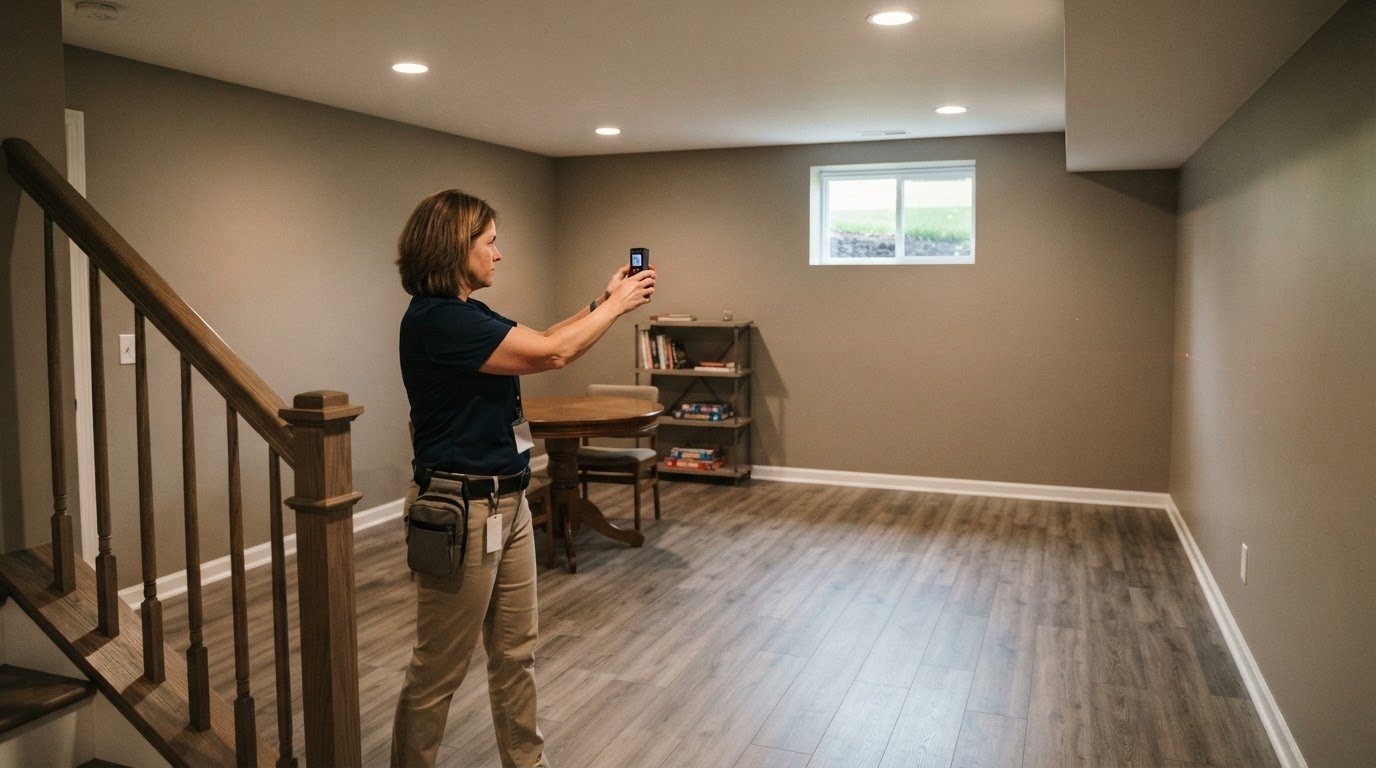
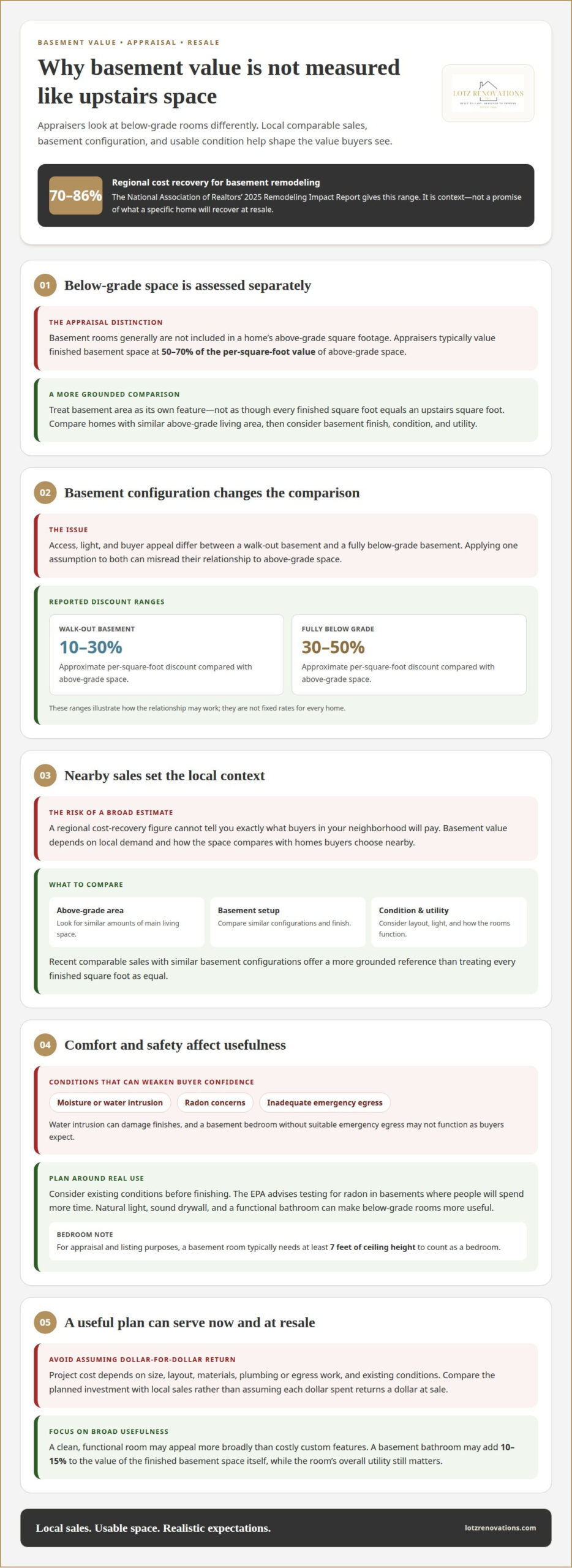
A finished basement doesn’t automatically return every dollar spent, so finished-basement home value depends on local buyer demand and the quality of the space. According to the National Association of Realtors’ 2025 Remodeling Impact Report, regional cost recovery from basement remodeling ranges from 70% to 86%.
It’s natural to hope a renovation will make your home more appealing and pay off at resale. But the effect of a finished basement on home value depends on more than its appearance: how appraisers compare below-grade space and what buyers value in your local market also matter.
This article explains how a finished basement may affect resale value, when the investment could make sense, and how appraisers evaluate comparable homes. You’ll get a clearer picture of what to weigh before deciding whether to finish your space.
Key Takeaways
- Weigh resale appeal alongside how long you’ll enjoy the added living space before deciding whether the project makes sense.
- See why appraisers compare below-grade space differently from a home’s main living area.
- Learn how nearby comparable homes can help frame realistic expectations for added value.
- Explore how a carefully planned basement renovation can make the space more functional and appealing to future buyers.
Will finishing my basement increase my home’s resale value enough to be worth it?
A finished basement can support resale when its layout and features match buyer demand and comparable sales in your area.
Resale Return on Basement Finishing
Resale return measures how much renovation spending is recovered at sale, helping frame the investment. The National Association of Realtors’ 2025 Remodeling Impact Report gives basement remodeling a 70-86% regional cost-recovery range. Location and finish choices matter: a clean, functional room may appeal more broadly than costly custom features. Using the space before re selling can add value beyond the eventual sale price.
Basements Versus Upstairs Additions
Finishing a basement adapts existing space; an upstairs addition creates above-grade living area. Appraisers typically value below-grade space less per square foot than main-floor rooms. An upstairs bedroom or bathroom serves a different purpose, while a basement can provide flexible guest or recreation space. Buyers’ priorities and your home’s layout help determine which option may better support resale appeal.
Basement Finishing Costs
Basement finishing costs depend on size, layout, materials, and plumbing or egress work. In the United States, the price depends on the project and is given after a quote request; scope, materials, and existing conditions shape the estimate. Compare the planned investment with local sales, rather than assuming each dollar returns dollar-for-dollar.
Issues That Can Reduce Basement Value
Moisture, radon, or inadequate egress can weaken comfort and buyer confidence. Water intrusion can damage finishes and make a renovated room less appealing. The EPA advises testing for radon in basements where people will spend more time. A basement bedroom without suitable emergency egress may not function as buyers expect, so these conditions matter before finishing.
Appraisal comparisons and comparable homes
Appraisers compare a home with similar properties, paying close attention to above-grade living area and local sales. Because basement rooms are below grade, they’re generally evaluated separately rather than included in the home’s above-grade square footage. Basement space is generally considered separately from above-grade square footage. That distinction matters when interpreting an appraisal or considering resale value.
Below-grade appraisal treatment reflects differences in access, light, and buyer appeal. Appraisers typically value finished basement space at 50-70% of the per-square-foot value of above-grade space. These figures illustrate how the relationship may work, not a fixed rate for every home.
Comparable homes help appraisers judge how buyers value features in the local market. They generally seek properties with similar amounts of above-grade living area, then consider basement finish, condition, and utility. A walk-out basement may receive a smaller per-square-foot discount, around 10-30%, while a fully below-grade basement may receive a 30-50% discount compared with above-grade space.
Details shape the comparison. Natural light, sound drywall, and a functional bathroom can make below-grade rooms more useful, while layout and finish quality distinguish one property from another. When selling, recent comparable sales with similar basement configurations offer a more grounded reference than treating every finished square foot as equal. Finished basement home value depends on how the space compares with homes buyers choose nearby.
Finished-basement impact on home value
A finished basement can add useful living space and resale appeal, but its impact depends on local buyer demand, a usable layout, and workmanship.
Sale Price and Resale Appeal
A finished basement may support a higher sale price by giving buyers flexible living space, though it doesn’t make every home worth the same amount more. The National Association of Realtors’ 2025 Remodeling Impact Report places regional cost recovery for basement remodeling between 70% and 86%. Treat that range as context, not a promise: nearby sales and the home’s existing features influence what buyers will pay.
Finish Quality and Home Value
Finish quality affects whether a basement feels like comfortable living space or an unfinished lower level. A straightforward remodel with sound flooring, clean drywall, useful lighting, and a practical layout can serve more buyers than costly custom details. Ceiling height and access also affect how the rooms function. For appraisal and listing purposes, a basement room typically needs at least 7 feet of ceiling height to count as a bedroom.
For a resale-focused investment, match the finish to the home and neighborhood rather than building beyond buyer expectations. A basement bathroom may add 10-15% to the value of the finished basement space itself, but the room’s overall utility still matters. Thoughtful planning can help keep the remodel cohesive. Plan a basement remodel around how the space will be used and experienced.
Lotz Renovations: Basement Renovation
Lotz Renovations, Inc. renovates basements to make them more useful parts of your home. Planning considers how the space will function day to day, how its layout connects with the rest of the house, and which finishes suit your needs and resale goals.
Consider a basement renovation when you’re weighing practical needs against potential buyer appeal or want a cohesive plan for the lower level. If the project connects with other areas of your home, kitchen, bathroom, or whole-house remodeling can be part of the broader vision.
Good planning starts with the space itself: its existing conditions, intended use, and the details that will make it comfortable. Contact Lotz Renovations, Inc. to discuss your basement renovation.
Shape a basement plan around your goals
A finished basement’s contribution to home value starts with a clear purpose. Decide how the space should serve you now, then let that use guide the layout, lighting, and finish choices. A room designed for everyday comfort can also feel more useful to future buyers. Keep the plan connected to the rest of your house rather than treating the basement as a separate project.
Before work begins, bring together your priorities for the space and the details that will shape its use. A resale-minded plan can emphasize broad appeal, while a long-term plan can reflect how your household lives. Finished basement home value depends on how the space fits the home and local buyer expectations, not on renovation alone. No project can promise a particular sale outcome, so choose improvements that make sense for your home as well as a future sale.
To discuss a thoughtful next step, start a conversation with Lotz Renovations. A well-planned space can serve your home today and leave room for tomorrow.
Frequently Asked Questions
Does a finished basement count toward square footage?
No. Fannie Mae appraisal guidance excludes basement area from a home’s total square footage, so it’s generally reported separately from above-grade living area. For example, a listing may show the above-grade measurement and describe finished lower-level rooms separately. This distinction helps buyers compare homes consistently and prevents basement area from being mistaken for additional above-grade space.
Does adding a basement bedroom increase home value more than a rec room?
Not automatically. A bedroom can appeal to households needing sleeping space, but its contribution depends on how local buyers value bedroom count and basement layout. A recreation room may be more useful when comparable homes already offer enough bedrooms. Consider which function better fits likely buyers rather than assuming a bedroom label alone guarantees a higher sale price.
Should You Finish Your Basement Before Selling Your House?
Consider the project only if the timeline allows quality work and the expected buyer appeal justifies the disruption. Homeowners listing within 3-6 months generally will not recoup the cost of a basement remodel. On a short timeline, a limited refresh or thoughtful presentation of the existing space may make more sense than starting a major renovation.
What could your home sell for?
A realistic asking-price range starts with recent nearby sales, above-grade size and condition, and how similar homes’ lower levels are presented. For homeowners in Hampshire, Huntley, Sycamore, Elburn, Algonquin, St. Charles, Campton Hills, Geneva, Batavia, and South Elgin, neighborhood comparisons provide useful context. A property-specific market analysis can account for details that broad averages miss.
What factors will affect ROI?
ROI reflects the relationship between project spending and the value recognized at resale. Scope matters: a flexible layout may serve a wider range of buyers than highly personalized rooms. Existing basement conditions, finish choices, local buyer preferences, and how long you’ll use the space also shape the decision. Set priorities before planning so each improvement supports a clear purpose.