

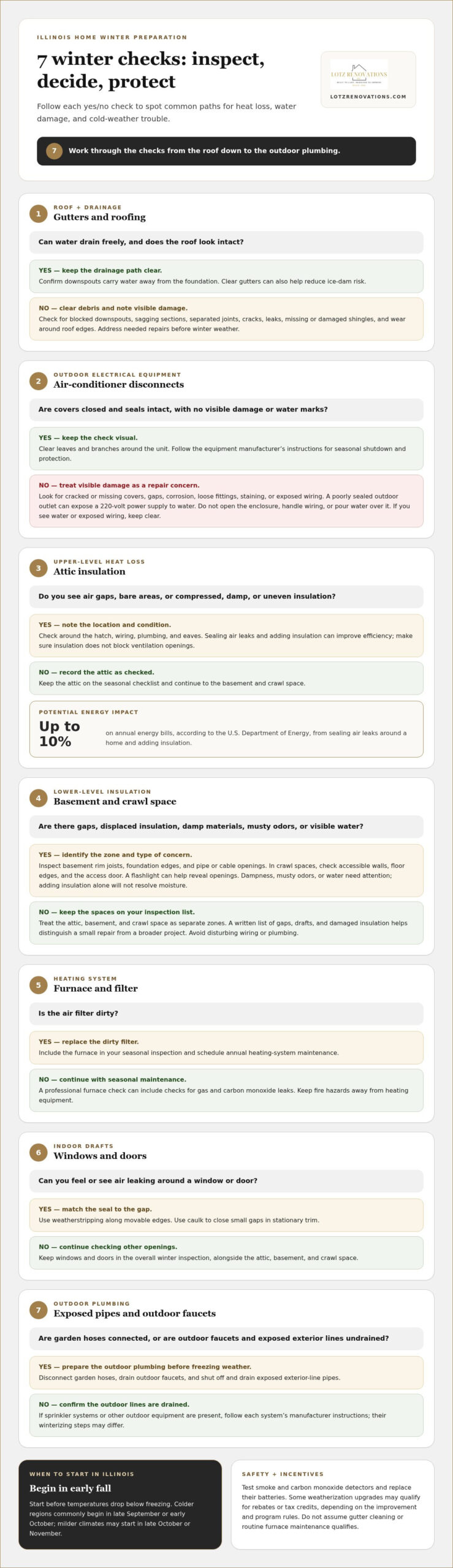
To prepare an Illinois home for winter, focus on these 7 items to winterize your home before the cold comes in: gutters and roofing, air-conditioner disconnects, attic insulation, basement and crawl-space insulation, heating equipment, drafty windows and doors, and exposed pipes and outdoor faucets. Together, these checks address common paths for heat loss, water damage, and cold-weather trouble.
It’s easy to think winterizing means turning up the heat and closing the windows. But a thorough checklist looks beyond the living spaces, including insulation in attics, basements, and crawl spaces, where gaps can make a home less comfortable. These seven checks explain what to look for, which tasks you may be able to handle yourself, and when a larger home improvement project may be the right next step.
Key Takeaways
- Clear gutters and inspect the roof for damage so water can drain away from your home.
- Check outdoor air-conditioner disconnects for exposed or poorly sealed areas before winter weather arrives.
- Look for air leaks and insulation gaps in the attic, basement, and crawl space, where heat can escape.
- If a larger home update is part of your plans, Lotz Renovations, Inc. offers kitchen remodels and basement renovations.
Cleaning gutters and inspecting the roof
Clear leaves and debris from gutters so rain and melting snow can drain freely. Check downspouts for blockages and make sure water flows away from the foundation. Look for sagging sections, separated joints, cracks, and leaks that could direct water against siding or the foundation. Clear gutters can also help reduce ice-dam risk. On the roof, look for missing or damaged shingles and visible wear around the edges. Address needed repairs before winter weather makes leaks harder to manage.
Include the furnace in your seasonal inspection. Replace a dirty air filter and schedule annual heating-system maintenance to support efficient operation. A professional furnace check can include checks for gas and carbon monoxide leaks.
DIY expenses mainly involve materials and replacement parts, while professional work depends on the home’s condition, access, and the work required. The price of professional work is determined for each project after a quote request.
Seal drafts around windows and doors with weatherstripping along movable edges, and use caulk to close small gaps in stationary trim. For outdoor plumbing, disconnect garden hoses, drain outdoor faucets, and shut off and drain exposed exterior-line pipes before freezing weather.
In Illinois, start in early fall, before temperatures drop below freezing. Colder regions commonly begin in late September or early October, while milder climates may start in late October or November.
For safety, test smoke and carbon monoxide detectors and replace their batteries. Furnace maintenance can include checks for gas and carbon monoxide leaks. Keep fire hazards away from heating equipment.
Some weatherization upgrades may qualify for rebates or tax credits, depending on the improvement and applicable program rules. Don’t assume gutter cleaning or routine furnace maintenance qualifies.
Checking air conditioner disconnects
Before cold weather, inspect the air-conditioner disconnect and nearby outdoor outlets. Look for a cracked or missing cover, gaps around the enclosure, water marks, corrosion, loose fittings, or exposed wiring. An improperly sealed outdoor outlet can expose a 220-volt power supply to water. Treat visible damage as a repair concern, not a reason to open the enclosure or handle wiring.
Keep this check visual. Clear leaves and branches from around the unit, but don’t take apart the disconnect or pour water over it. Note any damaged seals or covers so they can be addressed before winter precipitation reaches the equipment. If you see water or exposed wiring, keep clear of the area.
To winterize an air conditioner, sprinkler system, and outdoor equipment, inspect the AC disconnect and follow each system’s manufacturer instructions for seasonal shutdown and protection. Pay particular attention to exposed connections and places where water could collect. Sprinkler components and other outdoor equipment may require different winterizing steps.
For a final visual check, compare each outdoor electrical box with nearby outlets and equipment. See whether the covers close fully and whether any seals look split or detached. Staining beneath an enclosure can indicate that water has reached the area. Avoid inspecting electrical components inside the box.
Note where you find concerns, such as a loose cover beside the condenser or a gap around an outdoor outlet. This short list can help you address vulnerable spots before snow and freezing weather arrive, without risking contact with energized parts.
Attic, basement, and crawl-space insulation
Start in the attic, where gaps around the hatch, wiring, and plumbing can let heated air escape. Look for compressed, damp, or uneven insulation, and note bare areas near the eaves. Check that insulation doesn’t block ventilation openings. Sealing air leaks and adding insulation can improve efficiency across the home. According to the U.S. Department of Energy, sealing air leaks around a home and adding insulation can save up to 10% on annual energy bills.
In the basement, inspect the rim joists, foundation edges, and areas where pipes or cables enter. Gaps around these openings can let cold air reach the floor above. Use a flashlight to spot visible openings and determine whether the issue appears to be a small air leak or a larger insulation gap. Focus on building surfaces, and avoid disturbing wiring or plumbing.
Give crawl spaces the same careful inspection. Check accessible walls, floor edges, and the area around the access door for missing or displaced insulation. Damp materials, musty odors, or visible water need attention because adding insulation alone won’t resolve moisture. Note where the problem appears and whether it affects one section or the whole space.
Work through the attic, basement, and crawl space as separate zones. A short written list of gaps, drafts, and damaged insulation helps clarify which repairs are simple and which may call for broader renovation work. For a basement project involving insulation and finished space, explore basement renovation options that can address the room as a whole.
Lotz Renovations: Kitchen Remodel
If winterizing brings broader home plans into focus, Lotz Renovations can help with renovation projects. When your checklist points to a kitchen that needs more than seasonal upkeep, a Kitchen Remodel can reshape the space around your household’s needs. For connected updates across several rooms, a Whole house remodel may be a better fit. These projects are renovations, not substitutes for routine tasks such as clearing gutters or inspecting an air-conditioner disconnect.
Use your winter inspection to distinguish isolated concerns from those that point to larger changes. A draft near one opening may call for a focused repair, while renovation planning can make sense when you’re rethinking how several rooms work together. Lotz Renovations also offers Bathroom Remodel and Basement Renovation services for homeowners planning improvements in those spaces.
Contact Lotz Renovations to discuss which remodeling project fits your home.
Make Your Next Home Project Count
Winter preparation can also clarify what you want your home to do better in the seasons ahead. Use the 7 items to winterize your home before the cold comes in as a starting point for noticing where comfort, function, or layout could improve. If those observations point toward a larger change, choose a project that supports the way you live, not just the immediate task.
Lotz Renovations offers Kitchen Remodel, Bathroom Remodel, and Basement Renovation services for homeowners planning improvements in those spaces. A thoughtful renovation can bring lasting function to the rooms you rely on every day.
When you’re ready to discuss a project, contact Lotz Renovations. Take the next step with care, and make your home work better for the seasons to come.
Frequently Asked Questions
How do you fully winterize a home?
Fully winterize by treating the home as a connected system: reduce heat loss, direct water away, protect exposed plumbing, and prepare heating equipment. Use the 7 items to winterize your home before the cold comes in as a practical checklist, then add tasks that fit your property. Work from outdoor surfaces inward and note repairs that need attention before freezing weather arrives.
What does winterizing a house mean?
Winterizing prepares a home for cold weather while helping reduce avoidable drafts, water problems, and heating-system issues. It involves seasonal maintenance and checks inside and outside, rather than one single repair. For example, you might address a drafty entry, clear drainage paths, and protect plumbing exposed to outdoor temperatures as part of the same preparation.
What are the 7 most important items to winterize a home before cold weather?
The 7 items to winterize your home before the cold comes in are the roof and gutters, air-conditioner disconnects, attic insulation, basement and crawl-space insulation, heating equipment, windows and doors, and exposed pipes and outdoor faucets. Group related checks together, such as inspecting basement and crawl-space insulation in one pass, and note gaps or damp materials that need attention.
How should homeowners service a furnace or heating system before winter?
Schedule heating-system maintenance annually, replace a dirty filter, and keep the area around the furnace clear. During winter, replace HVAC air filters every one to three months. A professional furnace check can include checks for gas and carbon monoxide leaks. Homeowners in Hampshire, Huntley, Sycamore, Elburn, Algonquin, St. Charles, Campton Hills, Geneva, Batavia, and South Elgin can include these tasks in their seasonal preparations.
How do you clean gutters and prevent ice dams before winter?
Clear leaves and debris from each gutter, then make sure downspouts direct water away from the foundation. Look for cracks, loose joints, and sagging sections that could disrupt drainage. On the roof, note missing or damaged shingles that may allow leaks. Keeping water moving through gutters helps reduce conditions that contribute to ice dams, while clear drainage also helps protect the home’s lower areas.